V2MOM Framework Explained: From Vision to Measurable Results
 February 19, 2026
Strategic planning frameworks serve as essential tools for organizations seeking to align their teams toward common objectives. Among these methodologies, the V2MOM model stands out for its simplicity and scalability. Developed by Marc Benioff during the early days of Salesforce, this business planning framework has helped countless organizations maintain operational alignment while pursuing ambitious goals.
The framework addresses a critical challenge in modern business environments. A Leadership IQ study reveals that only 15% of employees fully understand the reasoning behind their organization’s strategy. This leaves 85% of the workforce operating in a state of confusion, often defaulting to mere compliance rather than genuine commitment.
As numerous studies have shown, compliance alone is a fragile and unreliable foundation for sustained performance. The V2MOM framework offers a solution by creating a transparent, cascading structure that connects individual efforts to organizational priorities.
What is V2MOM?
V2MOM represents an acronym for Vision, Values, Methods, Obstacles, and Measures. This business strategy framework provides organizations with a structured approach to define their destination, establish guiding principles, outline actionable steps, anticipate challenges, and measure progress. The methodology originated when Benioff scrawled the initial framework on an envelope, establishing the foundation for what would become a cornerstone of Salesforce's management philosophy.
The framework's design allows implementation across different organizational levels. Companies can apply the V2MOM model at corporate, departmental, team, or individual scales. Each level addresses identical questions while adjusting specificity based on context. Corporate leadership answers these questions broadly, while regional teams provide detailed, tactical responses aligned with overarching goals.
This scalability differentiates V2MOM from traditional business planning frameworks. Organizations avoid creating separate methodologies for different departments. Instead, they maintain consistency while allowing appropriate customization. This unified approach fosters understanding across silos and creates natural alignment points where different teams intersect.
The Five Components of V2MOM
Used by thousands of organizations worldwide, from fast-growing startups to global enterprises, the V2MOM framework transforms vague ambitions into clear, concrete, and measurable plans.
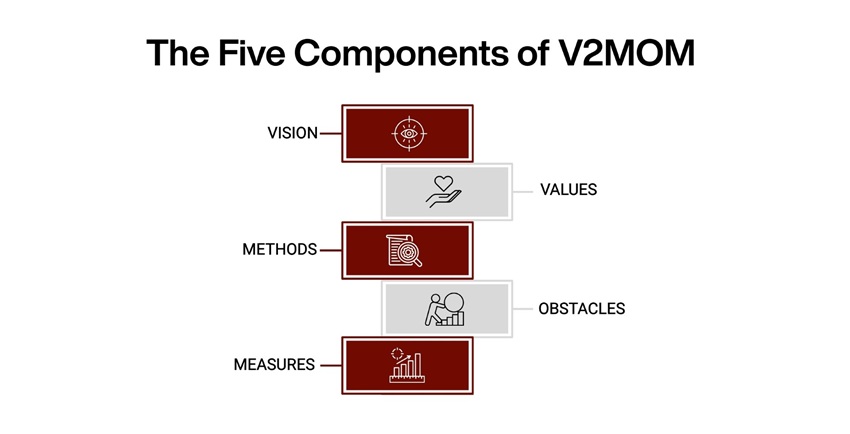
Here is a concise overview of each component, its purpose, and why it is so effective in aligning teams and driving strategic execution.
Vision
The Vision component defines your desired future state. This element answers fundamental questions about aspirations and intended impact. Strong visions inspire teams by articulating a compelling destination worth pursuing together.
Consider President John F. Kennedy's 1961 declaration about landing a person on the moon before the decade's end. This vision provided clear direction while inspiring extraordinary effort. Similarly, Amazon's vision to "build a place where people can come to find and discover anything they might want to buy online" guided the company's evolution from online bookstore to global marketplace.
When crafting your Vision, focus on outcomes rather than activities. Avoid including specific numbers, product features, or tactical initiatives. Instead, describe the beneficial change your organization promises to deliver. This forward-looking statement should inspire stakeholders while providing clarity about ultimate objectives.
Values
Values represent the principles of guiding behavior as teams pursue their Vision. These beliefs shape organizational culture and inform decision making processes. Well defined Values ensure actions remain consistent with core principles even when facing difficult tradeoffs.
Johnson & Johnson demonstrated commitment to their value of customer safety during the 1982 Tylenol tampering crisis. The company removed products from retailers' shelves despite the 100 million USD cost. This decision exemplified how Values guide choices when stakes are high.
Effective Values emerge through collaborative processes. Internal surveys and brainstorming sessions with stakeholders help identify principles that resonate across the organization. Once established, these Values should guide everyday decisions, helping teams navigate ambiguous situations while maintaining alignment with the Vision.
Methods
Methods describe specific actions required to achieve your Vision. This component represents the operational roadmap, detailing initiatives, objectives, and goals within defined timeframes. Methods transform abstract vision into concrete activities that teams can execute.
Despite its critical role, the Methods component often receives insufficient attention. Organizations sometimes rush through this section, creating vague statements instead of actionable plans. Effective Methods require careful consideration using frameworks like SMART criteria (Specific, Measurable, Achievable, Relevant, Time Bound).
When developing Methods, consider which strategic objectives will move your organization toward its Vision. Prioritize these actions based on impact and urgency. Some organizations enhance their Methods by integrating complementary frameworks like OKRs (Objectives and Key Results) to add structure and clarity.
Key considerations for Methods include:
-
Alignment with corporate V2MOM and manager objectives
-
Clear prioritization with highest impact items listed first
-
Simple, memorable language that inspires action
-
Balance between ambition and achievability
Obstacles
The Obstacles component distinguishes V2MOM from other business planning frameworks. This element requires teams to proactively identify challenges before beginning execution. Anticipating difficulties enables strategic resource allocation and reinforces focus by helping teams reject activities unlikely to impact goals.
Organizations approach Obstacles by asking "What does failure look like?" and "What challenges must we overcome to avoid failure?" These questions prompt realistic assessment of potential roadblocks including resource constraints, competitive pressures, regulatory requirements, or organizational limitations.
Identifying Obstacles creates two strategic advantages. First, teams allocate resources differently when they understand upcoming challenges. Second, recognizing specific hurdles reinforces focus by clarifying which activities merit attention. This proactive stance prevents wasted effort on initiatives that fail to address real challenges.
Measures
Measures establish metrics for tracking progress toward the Vision. This component answers "How will we know we're successful?" by defining quantifiable indicators that reveal whether efforts are producing desired results. Without clear measures, organizations struggle to assess effectiveness or make informed adjustments.
Effective measurement requires multiple indicators providing comprehensive insight. Rather than relying on single metrics, organizations should implement three types of measures:
-
Lagging KPIs reflect past performance, showing results from previous efforts. These traditional business metrics provide historical perspective but cannot predict future outcomes.
-
Leading KPIs focus on current activities that influence future results. These action based metrics reveal whether teams are executing in ways likely to achieve lagging targets.
-
Counter KPIs prevent over optimization by monitoring potential negative consequences. These metrics ensure teams avoid pursuing certain targets at the expense of broader organizational health.
For example, a product team might track user dropout rates before first game completion (lagging), hours spent researching new features (leading), and players quitting their first game (counter). Together, these Measures provide balanced insight into progress and potential issues.
Putting V2MOM into Practice Across the Organization
Implementing the V2MOM strategy tool requires a systematic approach beginning with leadership alignment. The process works most effectively when starting at the organizational level before cascading downward through departments and teams.
1. Initial Development
Begin by engaging leadership in deep discussion about each component. Schedule dedicated workshops focused on articulating compelling Vision and establishing core Values. These sessions should involve key stakeholders who understand organizational context and possess authority to commit resources.
During these discussions, resist premature solutions or tactical thinking. Vision and Values require careful consideration about fundamental purpose and principles. Once established, these elements provide foundation for subsequent components.
2. Creating Actionable Methods
After defining Vision and Values, develop specific Methods that translate aspirations into executable plans. Break down the Vision into discrete initiatives with clear ownership and timelines. Assign responsibility for each Method to ensure accountability throughout implementation.
This stage benefits from diverse perspectives. Include operational experts who understand practical constraints and opportunities. Their input helps create realistic Methods while building ownership across the organization.
3. Anticipating Obstacles
Conduct thorough risk analysis to identify potential challenges. Engage teams in honest discussion about what might prevent success. Document these Obstacles without sugarcoating or minimizing legitimate concerns.
Develop contingency plans addressing major Obstacles. These preparations might involve securing additional resources, building new capabilities, or establishing alternative approaches when primary Methods encounter resistance.
4. Establishing Measures
Set KPIs and metrics providing comprehensive performance visibility. Use both leading and lagging indicators to understand current activities and their likely outcomes. Establish baseline measurements enabling meaningful comparison over time.
Consider how different stakeholders will use these Measures. Executive leadership needs high level indicators showing organizational trajectory. Team managers require detailed metrics revealing operational effectiveness. Design measurement systems serving both audiences.
5. Review and Adjustment
The V2MOM model functions as a living framework requiring regular review. Schedule periodic assessments evaluating progress against Measures. During these reviews, examine whether Methods remain appropriate given current circumstances or whether adjustments are necessary.
Encourage feedback from all organizational levels. Frontline employees often recognize emerging challenges or opportunities before leadership becomes aware. Creating channels for this input strengthens the framework's responsiveness to changing conditions.
Common Challenges and Solutions
Despite apparent simplicity, organizations encounter challenges implementing the V2MOM model. Understanding these common pitfalls helps avoid frustration and improves outcomes.
Surface Level Implementation
Some organizations treat V2MOM as a checkbox exercise rather than a meaningful planning tool. They complete templates without genuine reflection or alignment discussion. This superficial approach produces documents lacking substance or impact.
Solution: Invest sufficient time in thoughtful development. Schedule extended sessions allowing deep discussion about each component. Encourage challenging questions and constructive debate. The effort invested during creation pays dividends during execution.
Insufficient Communication
Creating V2MOMs represents a necessary but insufficient step. Without ongoing communication reinforcing the framework, teams revert to old patterns. The strategy becomes divorced from daily operations.
Solution: Establish regular touchpoints for reviewing V2MOM alignment. Reference to the framework during team meetings, performance discussions, and strategic reviews. Leaders should consistently connect decisions and activities back to V2MOM components.
Static Frameworks
Business environments change constantly. V2MOMs created at year's beginning may become outdated as circumstances evolve. Organizations treating frameworks as fixed documents miss opportunities to respond to new information.
Solution: Schedule periodic reviews assessing V2MOM relevance. Adjust Methods or Measures when evidence suggests changes are necessary. Maintain Vision and Values stability while allowing tactical flexibility. This balanced approach preserves strategic consistency while enabling adaptive execution.
Measuring V2MOM Effectiveness
Organizations should evaluate whether V2MOM implementation produces intended benefits. Several indicators reveal framework effectiveness:
-
Strategic alignment improves when teams understand connections between their work and organizational priorities. Survey employees about their understanding of company strategy and how their roles contribute to success. Increasing awareness demonstrates framework impact.
-
Decision quality improves when teams use V2MOM components to guide choices. Monitor whether discussions reference Vision, Values, and Methods when evaluating options. This behavioral change indicates genuine integration into organizational culture.
-
Execution of velocity accelerates when teams focus efforts on aligned priorities. Track initiative completion rates and time required for approval processes. Reduced friction suggests improved alignment reducing organizational drag.
-
Employee engagement increases when people understand their purpose and see their contributions matter. Measure engagement through surveys and retention metrics. Higher scores correlate with effective V2MOM implementation creating clarity and motivation.
Cascading V2MOM Throughout Organizations
The true power of this business planning framework emerges when cascaded throughout organizations. Each department, team, and individual creates their own V2MOM aligned with higher level frameworks. This cascading creates natural alignment while maintaining appropriate autonomy at each level.
Consider a sustainability leader developing their V2MOM. Their Vision might focus on achieving zero environmental footprint within the industry. Values could emphasize sustainability, commitment, and community focus. Methods might include decreasing carbon footprint to zero by 2030, adjusting operations for local conditions by 2028, and shifting to sustainable energy sources by 2029.
Their Obstacles might involve transformation costs, operational complexity, and regulatory constraints. Measures could track manufacturing water usage, percentage of sustainable energy sources, and technology costs with ROI timelines.
This individual V2MOM connects directly to organizational priorities while addressing specific functional responsibilities. The leader pursues company objectives through their unique lens and capabilities.
Best Practices for V2MOM Success
When implemented effectively, V2MOM aligns the entire organization, from the CEO to individual contributors, around shared priorities, ensuring everyone is focused on the same strategic direction and working cohesively toward common goals.
These best practices, drawn from companies that live and breathe V2MOM, show how to make it work effectively at any level – whether for the whole organization, a team, or even your personal goals.
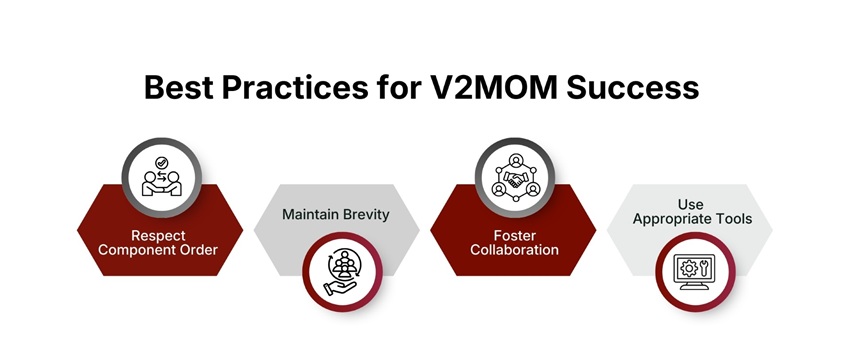
Respect Component Order
The sequence of Vision, Values, Methods, Obstacles, and Measures follows logical progression. Each element builds upon previous components. Skipping steps or rearranging order undermines the framework's coherence. Organizations should resist temptation to jump ahead even when certain elements seem straightforward.
Maintain Brevity
Effective V2MOMs fit on single pages. Lengthy documents include unnecessary detail obscuring core messages. Conciseness forces difficult prioritization decisions that ultimately strengthen strategic focus. Teams must rigorously prioritize themselves to express each component clearly while respecting space constraints.
Avoid jargon, acronyms, or complex language. The framework succeeds when everyone understands and remembers the content. Memorable language enables team members to reference their V2MOM when making daily decisions.
Foster Collaboration
Share draft V2MOMs with managers, peers, and team members before finalizing. Manager alignment ensures your Methods and Measures support broader objectives. Peer review reveals opportunities for collaboration and identifies potential conflicts requiring resolution. Team involvement builds ownership and facilitates their subsequent V2MOM development.
This collaborative approach improves quality while strengthening relationships. Teams appreciate transparency and opportunities to influence direction. The feedback received often reveals blind spots or suggests improvements strengthening the final framework.
Use Appropriate Tools
Organizations can implement V2MOM using various tools from simple templates to sophisticated platforms. Salesforce uses custom applications built on their platform, enabling easy sharing and visibility across the organization. Other businesses may prefer spreadsheets, presentation software, or dedicated strategy execution platforms.
The key consideration involves accessibility and maintenance. Teams need easy access to V2MOMs at all organizational levels. The chosen tool should facilitate regular updates and enable tracking against Measures. Some platforms offer automated dashboards providing real time performance visibility.
Conclusion
The V2MOM framework provides a powerful yet accessible approach to strategic planning and organizational alignment. Its five components create a comprehensive roadmap from aspirational Vision through measurable outcomes. The methodology's scalability enables consistent implementation across organizational levels while maintaining appropriate specificity.
Successful adoption requires more than completing templates. Organizations must invest time developing meaningful content, facilitate genuine alignment discussions, and maintain ongoing communication reinforcing the framework. When implemented thoughtfully, the V2MOM strategy tool bridges the gap between executive strategy and frontline execution.
The framework serves companies of all sizes seeking greater clarity and alignment. Whether leading startups or established enterprises, business leaders can leverage V2MOM to focus efforts, anticipate challenges, and track progress toward ambitious goals. The methodology's enduring popularity stems from its ability to create transparency while respecting organizational complexity.
Organizations beginning their V2MOM journey should start small, learn from experience, and expand implementation gradually. With patience and commitment, this business planning framework can transform how teams understand their purpose, collaborate toward shared objectives, and achieve remarkable results.