From Strategy to Execution: Why Even Great Models Fail Without Alignment
 December 24, 2025
Every year, organizations allocate millions of dollars to the development of strategic plans and innovative business models.
Yet, the sobering reality is that nearly 70% of business transformation initiatives fail to meet expectations. The strategy itself usually isn’t the problem. The real killer is the gap between the slide deck and Monday morning.
Consider this scenario: A CEO launches a bold strategic plan with clear goals, innovative ideas, and full leadership buy-in. Three months later, initiatives are scattered, deadlines slip, and employees remain unclear about priorities. Sound familiar?
That’s the execution gap in action, and it’s costing companies billions.
Research confirms this pattern is disturbingly common. Harvard Business Review reports that 67% of well-formulated strategies fail due to poor execution. The gap between ideation and implementation remains the primary reason most transformation initiatives fail to deliver their intended results.
What Is Strategic Alignment?
Strategic alignment is the process of ensuring that every component of your organization, from daily operations to technology investments, connects directly to your overarching business strategy. It's the invisible thread that should run through:
-
Vision and mission statements
-
Departmental objectives
-
Individual responsibilities
-
Resource allocation decisions
-
Performance metrics
-
Technology choices
Without this alignment, even the most sophisticated business models become theoretical exercises that never deliver real-world results.
The Root Cause: Misalignment in Three Dimensions
The execution gap manifests in three critical areas:
1. Strategic Misalignment
The vision never lands.
-
People hear the words but don’t know what changed for them
-
Priorities stay vague or contradictory
-
No one can draw a straight line from their daily work to the new strategy
2. Operational Fragmentation
The engine is still running the old playbook.
-
Processes, tools, and meetings are built for yesterday’s goals
-
Information flows slowly (or not at all) across teams
-
Every step forward requires heroic effort just to overcome internal friction
3. Behavioral Misalignment
Accountability points the wrong way.
-
Ownership is diffuse (“everyone’s responsible”)
-
What gets measured and rewarded hasn’t changed
-
Old habits win because new ones aren’t reinforced
When these three layers aren’t deliberately aligned, even the best strategy becomes just another deck that gathers dust.
Why Operating Models Matter More Than You Think
A brilliant business strategy is only half the equation. The other half? A well-designed operating model that translates strategic intent into operational reality.
The Operating Model Bridge
Your operating model is the architecture that connects strategy to execution. It encompasses:
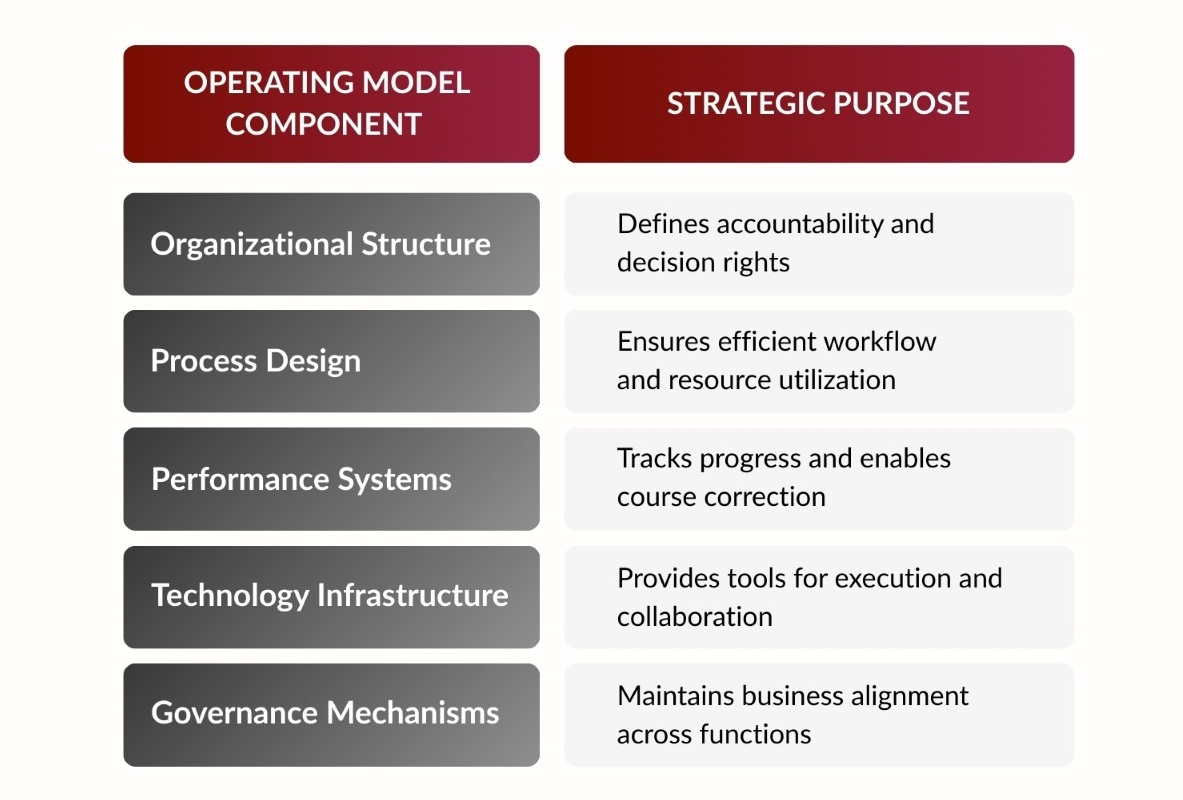
When these components work in harmony with your business strategy, execution becomes systematic rather than chaotic.
Real-World Impact: The GreenTech Case Study
GreenTech Solutions, a renewable energy company, faced a 15% market share decline despite having a clear strategy to become a market leader in solar energy by 2030.
The Transformation
By redesigning their operating model with integrated performance management, GreenTech achieved remarkable results within 12 months:
-
30% increase in operational efficiency
-
20% improvement in revenue growth
-
Significant boost in employee engagement
-
Restored market positioning
The key? Creating explicit connections between strategic goals and daily operations through structured alignment mechanisms.
The Four Pillars of Successful Execution
Great strategies fail without strong execution. The following four pillars turn plans into real results. Build them, and your organization delivers consistently.
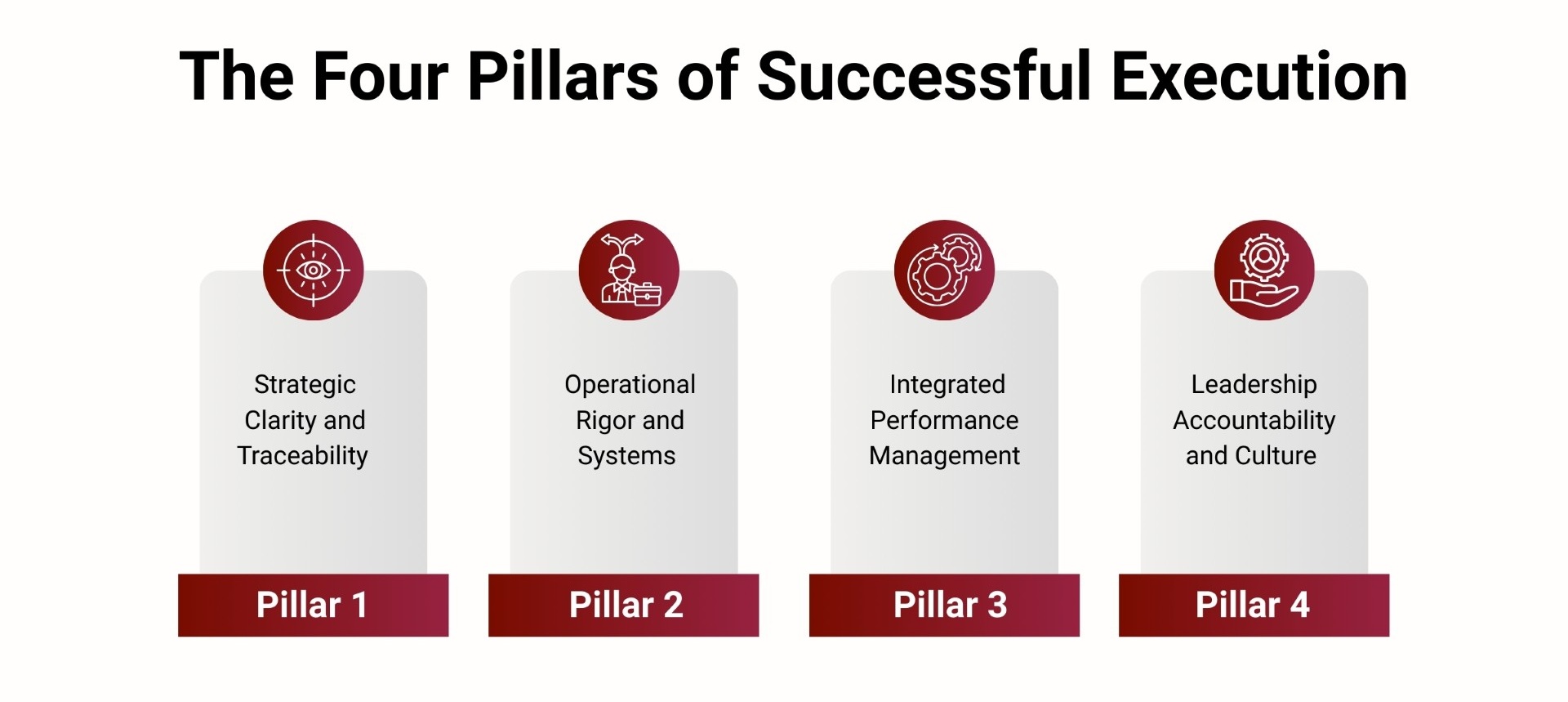
Pillar 1: Strategic Clarity and Traceability
What It Means: Every element of your organization, from capabilities to technologies, must be traceable back to strategic objectives.
How to Implement:
-
Use unique identifiers for strategic initiatives
-
Create hierarchical relationships between strategy layers
-
Document the connection between daily tasks and big-picture goals
-
Ensure every team member can articulate how their work supports company strategy
The AlignedX Approach: Structured frameworks organize interconnected models anchored by a foundational value stream. This ensures each component, whether it's a goal, process, capability, or technology, remains strategically aligned through explicit linkages.
Pillar 2: Operational Rigor and Systems
What It Means: Build repeatable systems for tracking, adapting, and delivering results.
How to Implement:
Create a simple, repeatable way to turn plans into results.
Write short playbooks that answer three questions:
-
What exactly must we achieve?
-
How will we measure success?
-
Who owns it?
Set a steady rhythm: weekly or bi-weekly check-ins, quick review-and-adjust sessions, and meetings that focus only on removing roadblocks and celebrating progress.
Give teams easy-to-use tools:
-
Task tracking (Asana, Monday.com, Trello)
-
Visual boards (Miro)
-
OKR software (Lattice, Ally.io, or similar)
When the process is this clear and consistent, strategy stops being a presentation and becomes what actually happens every day.
Pillar 3: Integrated Performance Management
What It Means: Performance tracking must be woven into the fabric of your operating model, not bolted on as an afterthought.
How to Implement:
Key Performance Tracking Elements:
-
Real-time dashboards showing progress against strategic objectives
-
Leading indicators that predict outcomes before they occur
-
Cross-functional metrics that encourage collaboration
-
Bottom-up feedback loops that surface execution challenges early
Best Practice: Conduct follow-ups at shorter intervals rather than quarterly reviews. Monthly or bi-weekly check-ins allow for faster course correction and maintain momentum.
Pillar 4: Leadership Accountability and Culture
What It Means: Execution of excellence must become a cultural norm, not just a process requirement.
How to Implement:
Create an Execution-Oriented Culture:
-
Transparency: Share progress, challenges, and course corrections openly
-
Ownership: Make accountability supportive but non-negotiable
-
Focus: Ruthlessly prioritize, resist chasing too many initiatives
-
Celebration: Recognize and reward execution wins
Leadership Behaviors That Drive Alignment:
-
Model the connection between daily decisions and strategy
-
Empower teams with resources and authority to execute
-
Regularly review and retire low-priority projects
-
Ask consistently: "How does this support our strategic objectives?"
Discover How Data-Driven Insights Can Revolutionize Your Business Strategy.
Download the Guide
A Practical Framework for Closing the Execution Gap
Most strategies fail not because they’re bad, but because they never get executed. This simple 5-step framework helps leaders turn vision into action with clear goals, strong systems, real feedback, and true accountability.
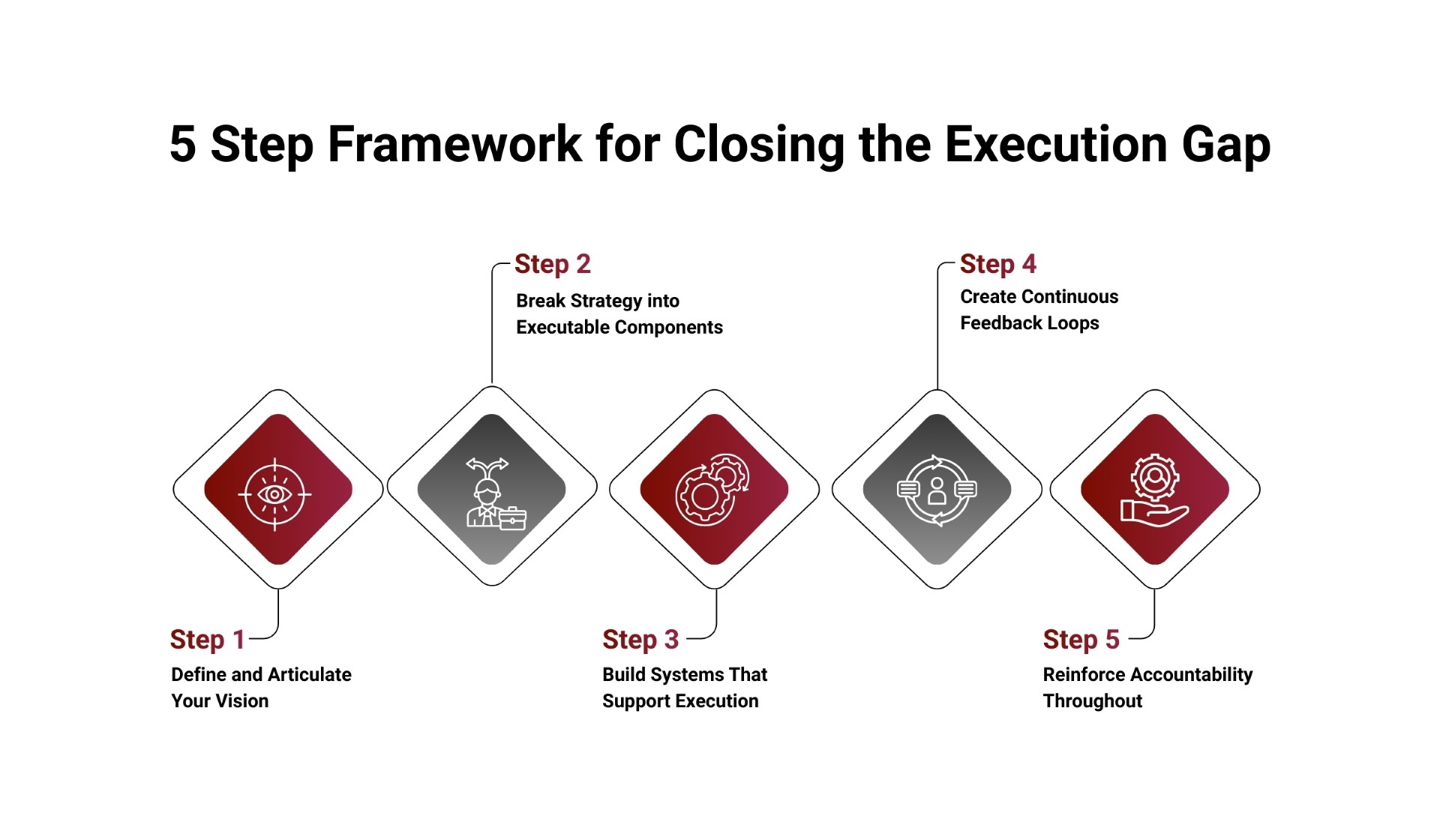
Step 1: Define and Articulate Your Vision
Actions:
-
Express your business strategy in clear, concise terms
-
Ensure leadership alignment on strategic priorities
-
Communicate why the strategy matters to every level of the organization
-
Make the vision memorable and repeatable
Step 2: Break Strategy into Executable Components
Actions:
-
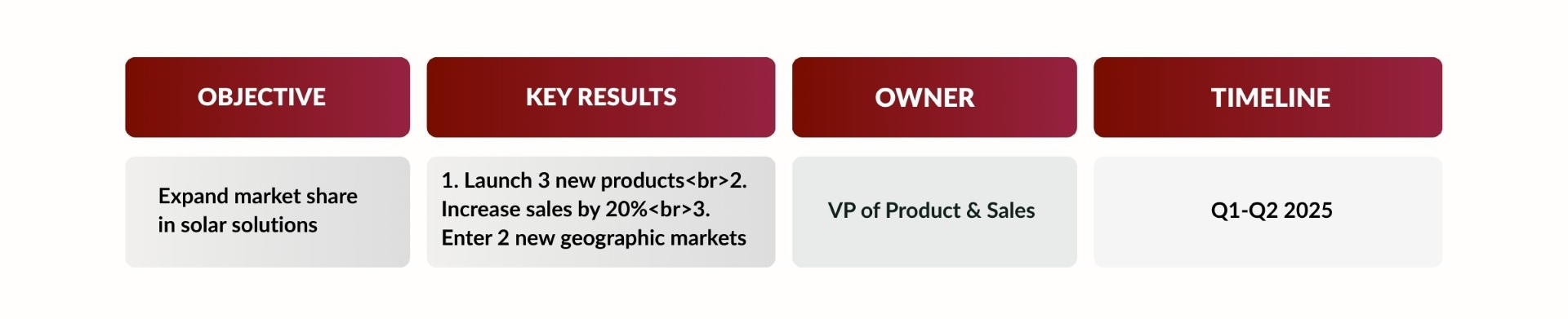
Divide strategy into quarterly OKRs (Objectives and Key Results)
-
Create milestone-based implementation plans
-
Assign clear owners to every objective
-
Establish measurable outcomes for each component
OKR Framework Example:
Step 3: Build Systems That Support Execution
Actions:
-
Implement collaborative tools for tracking progress
-
Establish regular touchpoints (daily standups, weekly reviews, monthly sprints)
-
Create documentation standards for decisions and outcomes
-
Ensure information flows freely across departments
Step 4: Create Continuous Feedback Loops
Actions:
-
Solicit input from frontline teams on obstacles
-
Conduct "retrospectives" to identify what's working and what isn't
-
Adapt strategy based on real-time insights
-
Share learnings across the organization
Focus Your Meetings On:
-
Surfacing and addressing bottlenecks
-
Reinforcing business alignment with the big picture
-
Celebrating small wins to sustain momentum
-
Making real-time adjustments to execution plans
Step 5: Reinforce Accountability Throughout
Actions:
-
Empower leaders to own key initiatives
-
Provide teams with resources needed to succeed
-
Address execution gaps quickly and constructively
-
Tie performance reviews to execution outcomes
Common Pitfalls That Destroy Alignment
Even great plans fall apart when teams lose focus. Here are four deadly mistakes and how to fix them fast.
Pitfall 1: Strategy as a One-Time Event
The Problem: Organizations treat strategy formulation as an annual exercise, then wonder why execution drifts over time.
The Solution: Make strategy a living, breathing part of your organization. Revisit and refine quarterly, communicate constantly, and adjust as market conditions change.
Pitfall 2: Too Many Priorities
The Problem: When everything is a priority, nothing is. Organizations dilute resources across dozens of initiatives, achieving mediocrity in all.
The Reality: Research shows that organizations pursuing more than 5 strategic priorities simultaneously see a 30% drop in execution effectiveness compared to those maintaining sharp focus.
The Solution: Practice ruthless prioritization. Focus on 3-5 strategic initiatives maximum. Say "no" to good ideas that don't align with core strategy.
Pitfall 3: Metrics That Don't Matter
The Problem: Tracking vanity metrics or lagging indicators that don't connect to strategic outcomes.
The Solution: Design metrics that directly measure progress toward strategic objectives. Include both leading and lagging indicators.
Pitfall 4: Siloed Execution
The Problem: Departments execute in isolation, creating conflicts and inefficiencies.
The Solution: Build cross-functional teams around strategic initiatives. Create forums for collaboration and information sharing.
The Role of Technology in Strategic Alignment
Modern technology can either enable or undermine strategic alignment. The key is selecting tools that support your operating model rather than forcing your operations to adapt to the tools.
Technology Enablers for Alignment:
-
Strategy management platforms that cascade goals throughout the organization
-
Collaborative workspaces that break down silos
-
Real-time analytics that provide visibility into execution progress
-
Communication tools that keep teams connected and informed
Technology Pitfall: Avoid "tool proliferation"—having too many disconnected systems that create more complexity than clarity.
How to Measure Alignment Success?
How do you know if your organization has achieved true strategic alignment? Look for these indicators:
Qualitative Indicators:
-
Employees at all levels can articulate the company strategy
-
Teams understand how their work contributes to strategic goals
-
Cross-functional collaboration happens naturally
-
Decision-making is faster and more consistent
Quantitative Indicators:
-
Strategic initiative completion rates above 80%
-
Revenue growth aligned with strategic projections
-
Employee engagement scores trending upward
-
Operational efficiency improvements quarter-over-quarter
Moving Forward: Your Execution Imperative
Strategies might inspire, but execution delivers. The organizations that thrive aren't those with the most sophisticated business strategy documents; they're the ones that master the art and science of translating strategy into coordinated action.
Key Takeaways:
-
Alignment is everything: Without explicit connections between strategy, operating models, and daily execution, even brilliant business models will fail.
-
Systems beat intentions: Build repeatable frameworks that enforce strategic alignment rather than relying on individual heroics.
-
Accountability drives results: Clear ownership, transparent tracking, and consistent follow-up transform strategy from theory to reality.
-
Culture matters: Execution excellence must become an organizational competency, not just a leadership mandate.
-
Continuous adaptation: Business alignment isn't a destination—it's an ongoing process of refinement and adjustment
The execution gap isn't inevitable. With structured frameworks, operational rigor, integrated performance systems, and relentless focus on business alignment, you can transform ambitious plans into measurable success. The cost of misalignment is simply too high to ignore.